




Complete Leh Ladakh Travel Guide (2025 Edition)
Ladakh Tourism: Beyond the Usual Narrative
Ladakh tourism has matured from a backpacker's secret to a world-class high-altitude destination. Unlike mass-market Himalayan destinations, Ladakh offers something increasingly rare: authenticity. Here, you'll find ancient Buddhist practices unchanged for centuries, landscapes that defy description, and a culture that welcomes visitors without being diluted by tourism.
Best Time to Visit Ladakh: Month-by-Month Analysis
Your experience varies dramatically by season:
- May-June (Best for first-timers): Pleasant days (15-20°C), all roads open, wildflowers bloom, moderate crowds.
- July-August (Peak season): Warmest (20-25°C), monsoon bypasses Ladakh, major festivals (Hemis Tsechu), book 3+ months ahead.
- September (Photographers' choice): Golden light, clear skies, fewer tourists, harvest season in villages.
- October (Off-beat): Early winter, dramatic clouds, some homestays close, adventurous souls only.
- Winter (Nov-Apr): Chadar trek, frozen lakes, extreme cold (-20°C), specialized gear needed.
How to Reach Ladakh: Pros & Cons
By Air (Kushok Bakula Rimpochee Airport, Leh)
Pros: Time-saving (1hr from Delhi), easier acclimatization, reliable. Cons: Expensive in peak season, baggage limits (15kg).
By Road - Srinagar-Leh Highway (NH1)
Pros: Gradual altitude gain (better acclimatization), lush scenery, passes through Dras (second coldest inhabited place). Cons: 2-day journey, landslides possible.
By Road - Manali-Leh Highway (NH3)
Pros: Iconic high passes (Taglang La 5,328m), raw Himalayan beauty. Cons: Rough roads, only open June-Sept, requires high fitness.
Altitude Acclimatization: The KashTrip Protocol
We follow WHO guidelines for high-altitude travel:
- Day 1-2: Complete rest in Leh (3,500m). No sightseeing. Drink 4-5L water.
- Day 3: Short local trips below 3,800m (monasteries).
- Day 4 onwards: Gradual ascent to Nubra (3,048m) via Khardung La (5,359m).
- Pangong rule: Only after 4+ days in Ladakh, with oxygen support.
Our vehicles carry portable oxygen cylinders and pulse oximeters. Drivers are trained in high-altitude first aid.
Permits Made Simple
As part of our service, we handle all paperwork. You just need to share:
- Indian citizens: Aadhar card copies, 2 passport photos (digital).
- Foreign nationals: Passport copy, visa copy, 2 photos (submitted 6 weeks prior).
Permits are checked at multiple checkposts. We provide both digital and physical copies.
Where to Stay: Accommodation Guide
We categorize stays into three tiers:
- Budget (₹1,500-2,500/night): Clean guesthouses, attached bathrooms, basic heating.
- Standard (₹2,500-4,500/night): 3-star hotels, deluxe camps, hot water 24/7, room heaters.
- Premium (₹4,500-8,000/night): Luxury camps, heritage hotels, private guides, gourmet meals.
Top Experiences in Ladakh
- Pangong Lake: Overnight stay mandatory for sunrise colors.
- Nubra Valley: Double-humped Bactrian camel safari at Hunder.
- Tso Moriri: Remote, sacred, bird-watching paradise.
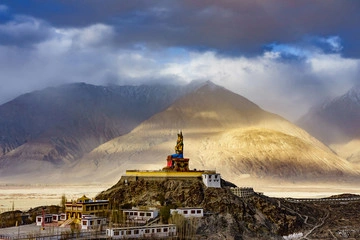
- Monasteries: Hemis (largest), Thiksey (mini Potala), Diskit (32m Buddha).
- Hanle Dark Sky Reserve: India's first, astrophotography tours available.
- Local Cuisine: Skyu, momos, butter tea at family-run eateries.
For deeper insights, explore our Kashmir tour packages or combine both regions for a 14-day Himalayan odyssey.
Ladakh at a Glance
- Altitude: Leh 3,500m
- Ideal duration: 6-8 days
- Best time: May-Sep
- Permits: ILP/PAP included
- Language: Ladakhi, Hindi, English
- Currency: INR (carry cash)